
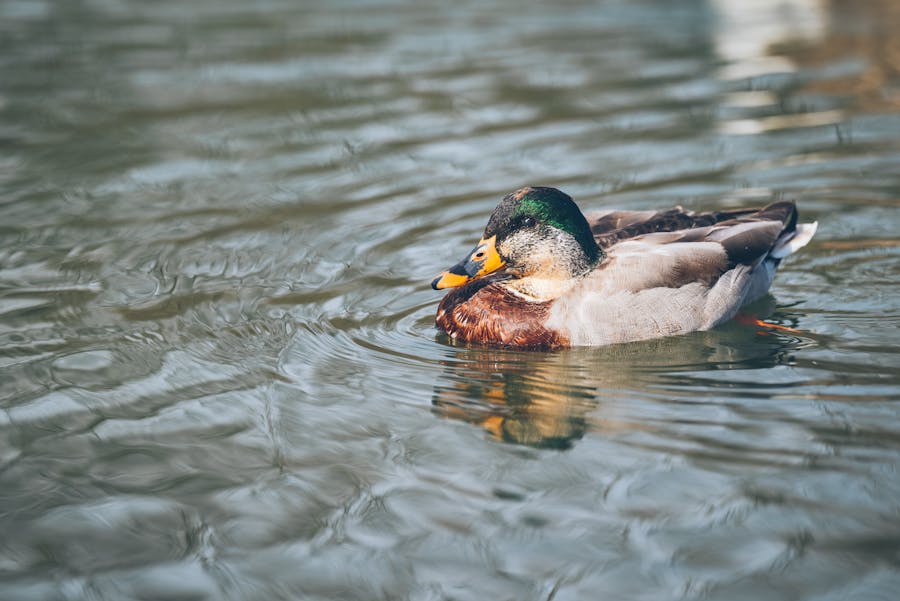
 🦆
Splashing about happily on the pond
🦆 Duck
Waterproof wonders
Ducks can sleep with one eye open and half their brain awake — keeping watch for danger. Their feathers are completely waterproof thanks to a special oil they spread while preening. Ducklings imprint on the first thing they see and follow it everywhere.
Animal fact file
Typical lifespan
10–15 years
Years of life with suitable care, not ages at slaughter. These are approximate ranges: breed, health and care matter, and some individuals live longer.
- Food and digestion
- Ducks are generally omnivores. Depending on the species, they eat water plants, seeds and small animals. Domestic ducks need suitable waterfowl feed; bread is not a balanced diet.
- Home and habitat
- Ducks need clean water deep enough to dip their whole head, dry resting space and protection from predators. Safe bathing water supports natural behaviour; wild ducks use wetlands, rivers and lakes.
- Growing up
- A baby is a duckling and hatches from an egg. Ducklings need suitable food, warmth and supervised access to safe water; downy babies can become chilled.
These are learning facts, not feeding instructions. Ask a veterinarian about an individual animal’s needs. Never feed or approach an unfamiliar animal without its caregiver’s permission.
💡 Did you know?
- Some duck species migrate long distances; others stay near home
- Blood vessels in their legs help conserve body heat in cold water
- Communicate with quacks, whistles, and grunts
💛 What this means
Most ducks raised for meat or down never see a pond — and they need water to stay healthy. For down feathers and foie gras, ducks are sometimes plucked or force-fed in painful ways.
Pick puffer jackets filled with recycled polyester or plant down (PrimaLoft Bio) — just as warm, no ducks involved. 🧥💚
Meet more friends 🌼


Duck facts for kids
A gentle, accurate guide to ducks for families, teachers and curious kids — with facts, factory-farm context, and kind plant-based choices.
Common questions from parents
- Should we give ducks bread?
- Bread is not a suitable regular food for ducks, and leftovers can dirty the water. Watching quietly is a kind choice. Ask a grown-up to check local signs and wildlife advice before offering any food.
- Are ducks smart?
- Some duck species migrate long distances; others stay near home
- What do ducks eat?
- Ducks are generally omnivores. Depending on the species, they eat water plants, seeds and small animals. Domestic ducks need suitable waterfowl feed; bread is not a balanced diet.
- How can kids help ducks?
- Pick puffer jackets filled with recycled polyester or plant down (PrimaLoft Bio) — just as warm, no ducks involved. 🧥💚