
Animals · · 10 min read
Fun Facts About Farm Animals for Kids
Did you know cows have best friends and pigs love video games? Dive into our cheerful, kid-friendly guide packed with incredible farm animal facts!
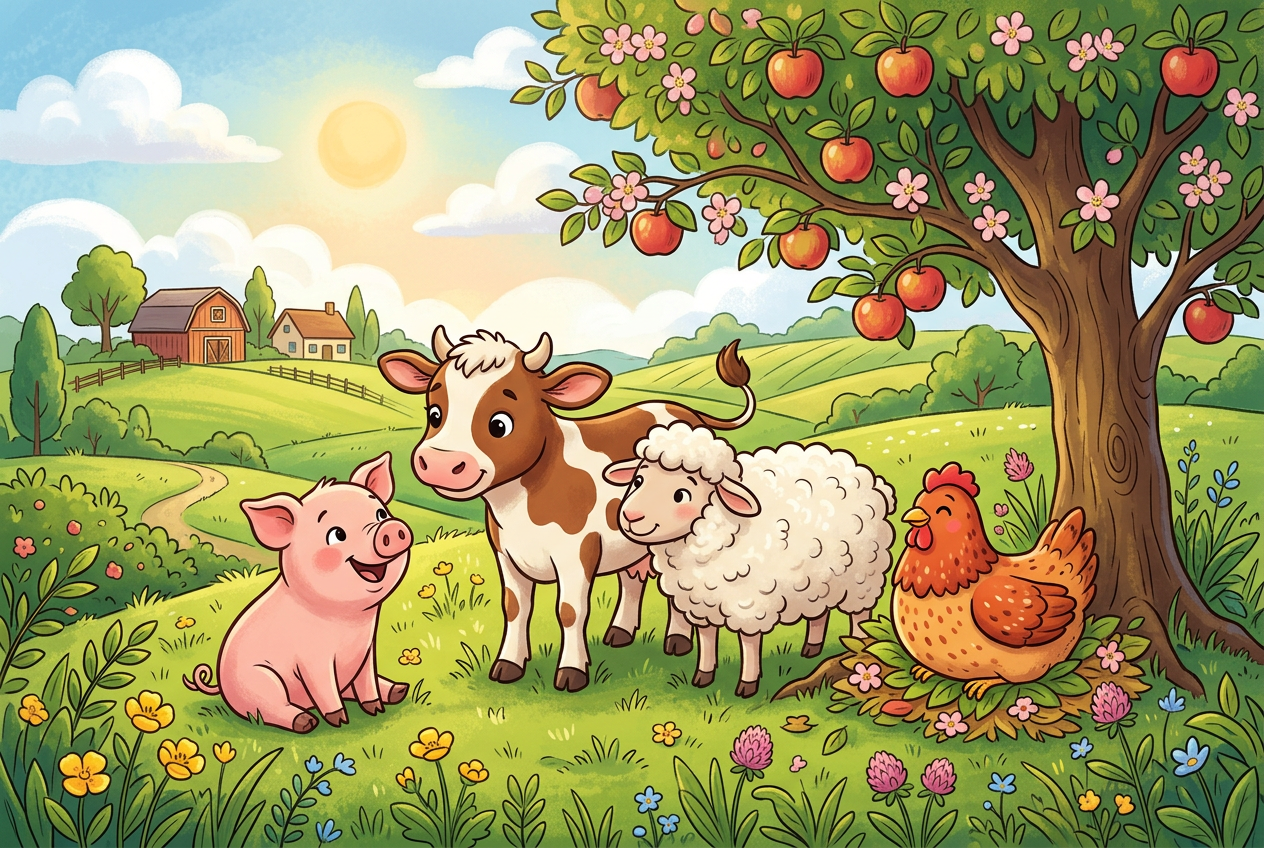
🐮 Discovering Fun Facts About Farm Animals for Kids
Welcome to Veggie Village, where we love getting to know the amazing creatures who share our planet! If you are searching for fun facts about farm animals for kids, you are in for a wonderful adventure. Across meadows, barns, and sanctuaries, animals like pigs, cows, sheep, chickens, and goats live complex lives filled with friendship, playfulness, and clever problem-solving.
Learning facts about farm animals for kids helps us see these gentle beings in a whole new light. Far from being simple, each animal has their own personality, unique voice, favourite games, and special friendships. Let us dive into the wonderful world of farm friends and discover the secrets that make each one so extraordinary!
🌟 10 Facts About Farm Animals for Kids
Need a quick list of top highlights for a school project, show-and-tell, or bedtime reading? Here are 10 facts about farm animals for kids that will amaze your family and teachers:
- Cows have favourite best friends: Research shows that when cows hang out with their best pasture pal, their heart rates lower and they feel noticeably calmer and happier.
- Pigs love tunes: Pigs enjoy listening to music, wag their curly tails when pleased, and can even learn to play simple video games using their sensitive snouts on joysticks.
- Chickens speak a complex language: Hens and roosters use more than 30 distinct vocal calls to say things like 'look out, hawk above!' or 'tasty seeds down here!'
- Sheep never forget a face: Sheep can recognise and remember the faces of at least 50 other sheep and familiar humans for more than two whole years.
- Goats are born acrobats: Many wild and domesticated goats have rectangular pupils that give them wide-angle vision, helping them climb steep hills and balance on narrow ledges.
- Turkeys blush with feeling: The bare skin on a turkey's head and neck changes colour from red to bright blue or pure white depending on whether they feel excited, calm, or curious.
- Ducks have waterproof coats: Ducks produce a special preen oil near their tails that they spread over their feathers, creating an invisible raincoat that keeps them completely dry under water.
- Horses talk with their ears: A horse points their mobile ears toward whatever they are focusing on, sharing their thoughts and mood with fellow herd members.
- Mother hens chat before hatching: Mother hens gently purr and cluck to their unhatched eggs, and baby chicks peep back softly from inside their shells days before breaking out.
- Pigs are squeaky clean: Despite their muddy reputation, pigs only roll in cool mud to protect their sensitive skin from sunburn and hot weather because they do not have sweat glands.
🐷 Pigs: The Super-Smart, Mud-Loving Geniuses
When gathering fun facts for kids about farm animals, pigs almost always steal the show because of their incredible brains. Animal scientists have discovered that pigs are among the smartest animals on Earth, easily ranking alongside chimpanzees, dolphins, and elephants in cognitive problem-solving.
Why Mud is a Pig's Best Sunscreen
Have you ever heard the saying 'sweating like a pig'? It turns out that phrase is totally inaccurate! Pigs have almost no functional sweat glands. On warm sunny days, rolling in cool mud acts as a natural air conditioner, moisturiser, and eco-friendly sunscreen that protects their pale skin from bugs and UV rays. Once the mud dries, pigs happily rub it off on a tree or fence post, leaving their skin clean and fresh.
Video Games and Snout Powers
- Snout navigation: A pig's snout has thousands of tactile touch receptors, making it just as sensitive and dexterous as human fingertips.
- Mirror mastery: Pigs understand how mirrors work by age six weeks, using reflections to find hidden food bowls around corners.
- Gamer piglets: In laboratory studies, pigs learned to steer computer joysticks with their snouts to hit moving targets on digital screens.
- Deep dreamers: Pigs dream just like humans do and love snuggling nose-to-nose with family members when taking afternoon naps.
🐄 Cows: Gentle Giants with Deep Friendships
Cows are gentle, curious herbivores that form intricate social communities. When exploring farm animals facts for kids, many people are surprised to learn how emotionally expressive cattle can be. They hold long-term memories, show empathy toward distressed herd mates, and celebrate fun moments with high-spirited jumps called 'binkies'!
Compass Senses and Panoramic Vision
Scientists using satellite imaging noticed an astonishing habit: when grazing or resting in pastures, cattle around the globe tend to align their bodies along Earth's magnetic north-south axis. Researchers believe cows possess an internal magnetic compass that helps them orient themselves in open fields.
- Nearly 360-degree vision: Because their eyes sit on the sides of their heads, cows can spot rustling leaves or approaching friends without turning around.
- Super scent detectors: A cow can smell natural aromas and fresh water up to six miles away.
- Four-chambered tummy magic: Cows do not actually have four separate stomachs; they have one large stomach with four distinct digestive chambers (rumen, reticulum, omasum, and abomasum) designed to ferment and unlock nutrients from tough grasses.
- Melodic moos: Every cow has an individual vocal frequency, so mothers and calves can identify each other by call alone across a bustling field.
🐔 Chickens and Turkeys: Clever Feathered Friends
Birds on the farm are closely related to prehistoric dinosaurs, and their sharp intellect reflects millions of years of evolutionary cunning. If you ever watch a chicken explore a garden, you will notice intense curiosity, quick problem-solving, and affectionate bonds with their flock mates.
Chickens Count and Plan Ahead
Young chicks can grasp basic arithmetic within days of hatching. In scientific trials, chicks consistently identified which container held more grain pellets, demonstrating an understanding of quantity, addition, and subtraction. Chickens also demonstrate self-control: they can choose to wait patiently for several minutes if they know waiting will earn them a much bigger treat later!
Turkeys Love to Cuddle
- Musical turkeys: Turkeys often chirp along when people play acoustic guitars, flute melodies, or sing cheerful songs.
- Lap bird cuddles: Turkeys raised at farm sanctuaries often enjoy gentle head scratches and will fall asleep on a caregiver's lap.
- UV vision: Chickens and turkeys see a broader spectrum of colours than humans can, including ultraviolet wavelengths that help them spot insects and ripe seeds in tall grass.
- Dust bathing spa: Instead of splashing in water, birds clean their plumage by rolling in warm dry dust, shaking it out to keep their feathers sleek and free of pests.
🐑 Sheep and Goats: Nature's Masterminds and Climbers
Sheep and goats are lively, clever ruminants with distinct talents. While sheep rely on strong cooperative teamwork and remarkable memory, goats are famous for their bold curiosity and acrobatic climbing skills.
| Farm Animal | Unique Superpower | Social Style | Fun Quirky Habit |
|---|---|---|---|
| Sheep | 50-face photographic memory | Peaceful flock synchrony | Can recognise different human emotional facial expressions |
| Goat | Gravity-defying climbing balance | Playful, curious explorer | Explores interesting objects by gentle nibbling |
| Pig | Advanced spatial reasoning & puzzle solving | Tight-knit family sound cues | Sleeps nose-to-snout and wags tail when happy |
| Cow | Earth magnetic field sensing | Forms loyal best-friend duos | Leaps and skips ('binkies') when let out into spring grass |
📊 How Much Do Farm Animals Sleep Every Day?
Just like kids need good sleep to grow tall and strong, our animal friends need their daily rest. Some animals, like pigs, love long, deep naps, while grazing prey animals like horses and cows rest in many short power naps throughout the day and night.
🦆 Ducks and Geese: Feathered Water Explorers
Ducks and geese bring lively energy to farm ponds and wetlands. These waterfowl have remarkable adaptations that allow them to thrive on land, in freshwater, and up in the sky.
- Paddle feet that never get cold: A duck's webbed feet have a special counter-current heat-exchange circulatory system, preventing them from freezing even when swimming on icy ponds.
- One eye open: Ducks can engage in unihemispheric slow-wave sleep. That means half of their brain sleeps while the other half stays awake with one eye open to watch for danger!
- Lifelong devotion: Geese form deeply loyal pair bonds, sticking together year after year and faithfully guarding their family nest.
- Waterproofing marvel: Duck feathers interlock with microscopic barbs like tiny zippers, keeping an insulating cushion of warm air right next to their skin.
💛 How Kids Can Show Kindness to Farm Animals
Now that you know these incredible facts about farm animals for kids, you might wonder how you and your family can help them lead happy, safe lives. Animals feel joy, love their babies, cherish companions, and enjoy sunshine just like dogs and cats do. Here are practical ways young heroes can make a difference:
- Visit a verified farm sanctuary: Instead of petting zoos, visit rescue sanctuaries where animals live peaceful, protected lives and kids can observe their natural behaviours.
- Enjoy plant-based family meals: Choosing tasty meals packed with crunchy vegetables, beans, grains, and fruits is a kind, gentle way to protect animals and the planet.
- Read and share true animal stories: Tell your friends, classmates, and teachers about cow best friends, pig video games, and duck waterproof coats!
- Draw animal portraits: Celebrate the distinct personality of a sheep, goat, or turkey through art, poetry, or classroom posters.
❓ Frequently asked questions
- What is the smartest farm animal?
- Pigs are widely considered the smartest farm animals. Research shows their cognitive capabilities rival those of chimpanzees and dolphins; they can solve complex mazes, understand mirror reflections, and use joysticks.
- Do cows really have best friends?
- Yes! Scientific studies by animal welfare researchers show that cows form strong individual friendships. When paired with their preferred best companion, their stress levels drop and their heart rates remain significantly lower.
- Why do chickens make so many different sounds?
- Chickens have a sophisticated communication system featuring over 30 distinct vocal calls. They use specific calls to warn their flock about aerial versus ground predators, celebrate finding food, and soothe their chicks.
- Can sheep recognise human faces?
- Yes, sheep have photographic facial memories. Studies conducted at the University of Cambridge revealed sheep can remember up to 50 individual faces of both sheep and familiar humans for two or more years.
- Do farm animals like listening to music?
- Many farm animals respond positively to gentle music. Research has found that calm acoustic music can help soothe cows, while turkeys and pigs frequently show curious, relaxed reactions to melodic instruments and singing.
- How can kids help farm animals every day?
- Kids can support farm animals by learning about their natural lives, visiting cruelty-free animal rescue sanctuaries, sharing positive facts with friends, and enjoying delicious, colourful plant-based meals at home.
📚 Sources
- Thinking Pigs: A Review of Cognition, Emotion, and the Social Complexity of Domestic Pigs — National Center for Biotechnology Information (NCBI)
- Animal Welfare and Behaviour Insights — Farm Sanctuary