The Truth, told kindly.
Most of the meat, milk, and eggs in stores don't come from sunny meadows like in books. They come from giant places called factory farms. Here's what's really happening — explained gently.
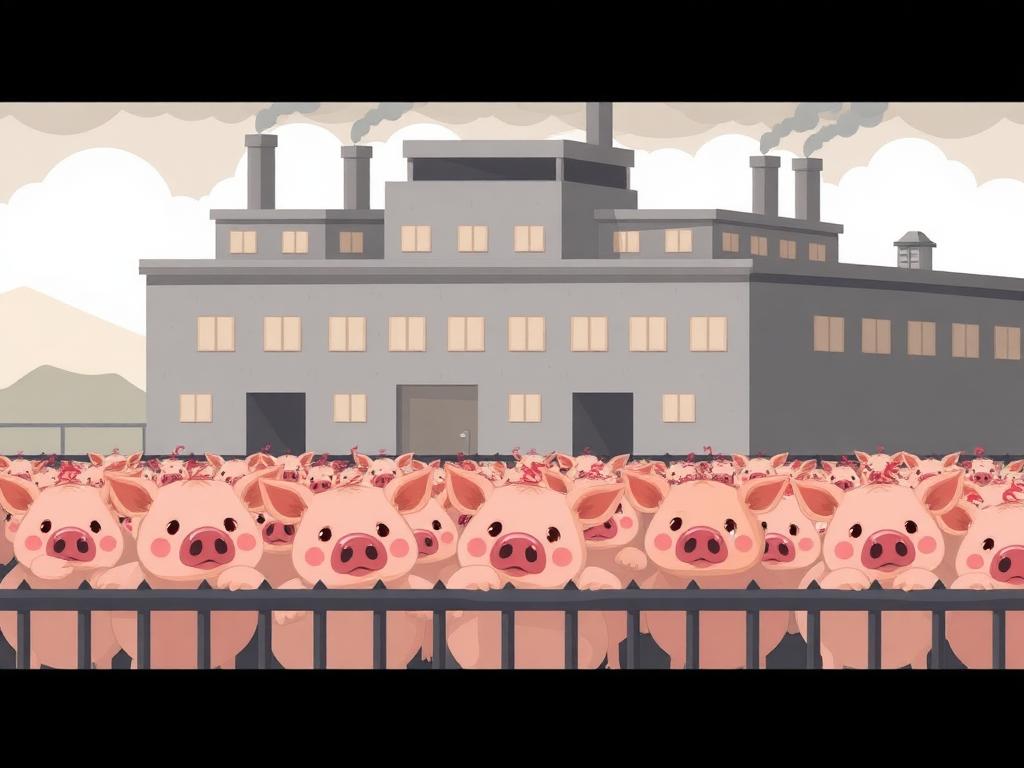
What is a factory farm?
It's a huge building where thousands of animals live very close together. There's usually no grass, no sunshine, and no room to run.
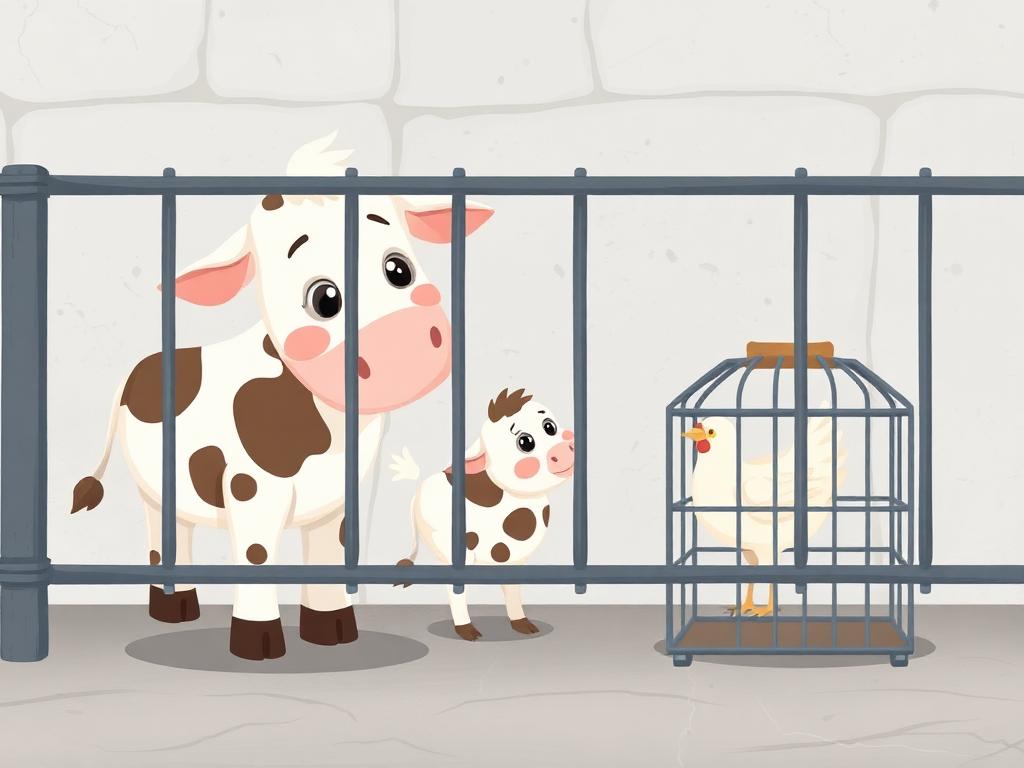
How do the animals feel?
They get sad and lonely. Mama cows are taken away from their babies. Chickens can't spread their wings. They don't get to be themselves.
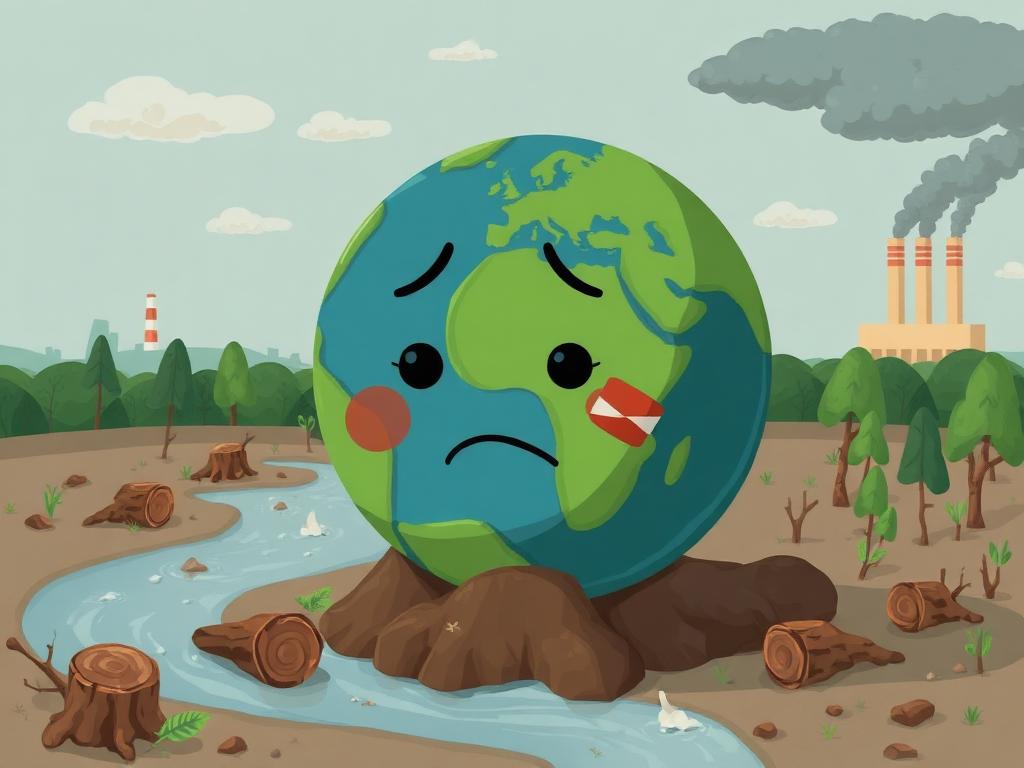
What about the planet?
Factory farms use a LOT of water, land, and energy. They cut down forests and pollute rivers. Earth gets a tummy ache.
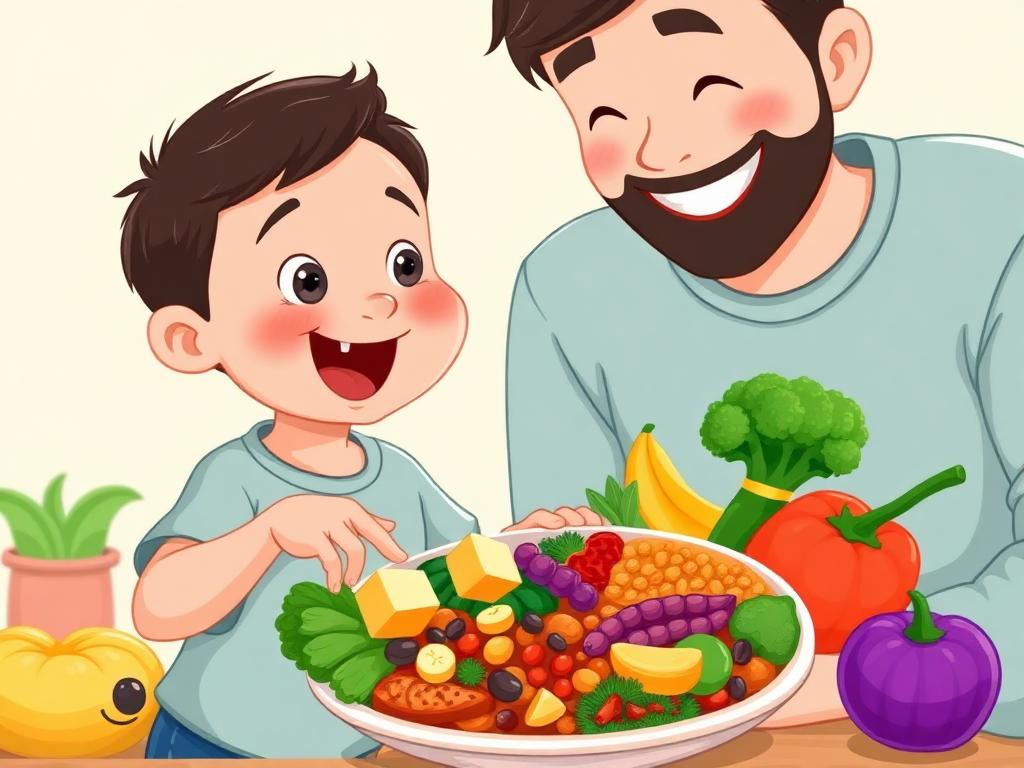
What can we do?
Eat more plants! Even one plant-based meal a day helps animals, the planet, and your body. Tiny choices add up to big change.
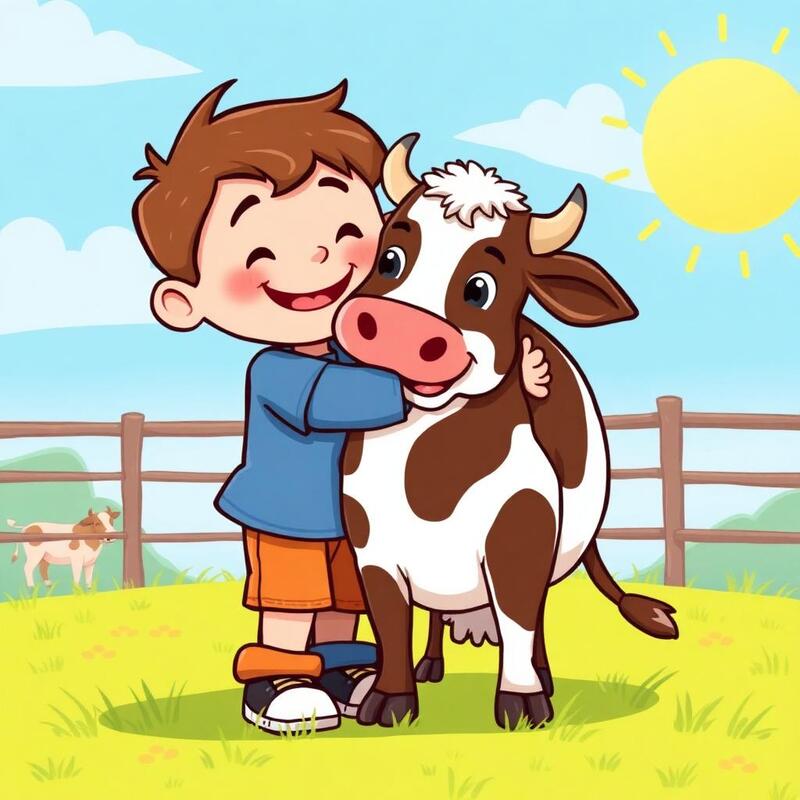
There's good news! 💛
All over the world, people are building sanctuaries — safe homes where rescued animals get to live full, happy lives. They're proof that kindness wins.
Ask a grown-up to help you find a sanctuary near you to visit or support.
Where do most farm animals in stores actually live?
How to explain it, age by age 🧒
Children understand kindness long before they understand systems. Use the words that match where your child is right now, and let their questions lead.
| Age | What they can grasp | Try saying |
|---|---|---|
| 4–6 | Animals feel happy, scared and sleepy, just like us. | “Cows have best friends and moms, so we choose food that keeps them safe.” |
| 7–9 | Food comes from somewhere, and choices have consequences. | “Most farm animals live in big indoor sheds. Plant meals mean fewer animals live that way.” |
| 10–12 | Systems, numbers, climate links and their own agency. | “Animal farming uses a lot of land and water. You can decide what goes on your plate.” |
Talking to kids about factory farming — a gentle, honest guide
This page explains where most meat, milk and eggs come from in words a child can hold: crowded indoor sheds, families separated, and animals who never see grass. It pairs every hard fact with something hopeful — sanctuaries, plant-based meals, and the real difference one kind choice makes. Read it together, pause on the pictures, answer questions honestly, and finish on the good news: kindness is always available, three times a day.
Common questions from parents
- How do I talk to my kid about where meat comes from?
- Be honest, calm and short. Use age-appropriate language, answer the question that was actually asked, and follow your child's lead — if they want to know more, keep going; if they need a break, pause. The /parents page has age-by-age scripts; /truth has a kid-friendly read-together version.
- At what age can a child read the truth about factory farming?
- Most kids 7 and up can handle the /truth page when read with a grown-up. The page opens with a read-with-a-grown-up notice, uses gentle language, and never shows graphic images of suffering.
- Will learning about factory farming traumatize my child?
- Children typically handle honest, age-appropriate information far better than parents expect — what hurts is feeling lied to or alone. Reading /truth together, answering questions calmly and finishing with what your family does to help builds agency, not fear.
- Is factory farming really that bad for the planet?
- Yes. UN FAO and Our World in Data estimate animal agriculture causes roughly 14–20% of global greenhouse-gas emissions and uses around 77% of farmland to produce under 20% of calories. The /truth page presents this in language a 7- to 12-year-old can grasp.