
 🦃
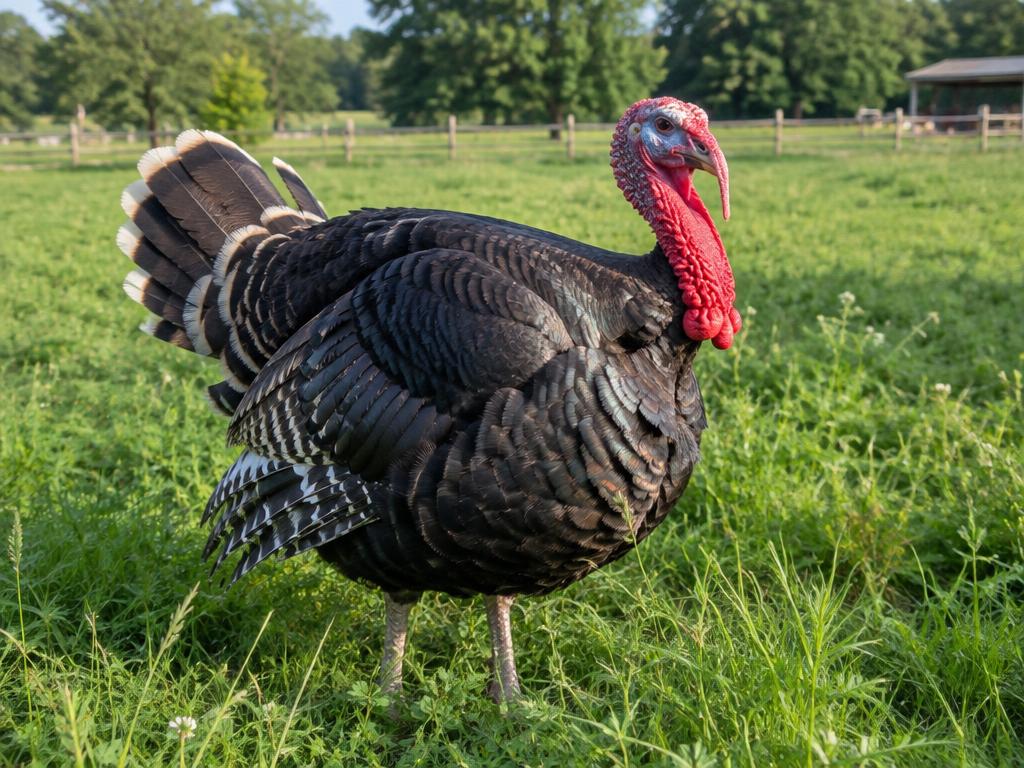
A proud turkey fanning its tail feathers
🦃 Turkey
Chatty, curious, and full of personality
Turkeys are curious and social birds who recognize each other and enjoy being around familiar flock mates and people. They make more than 20 different sounds, and the famous gobble is mostly made by males to announce themselves. Turkeys also love sunbathing and dust-bathing to keep their feathers in good shape.
Animal fact file
Typical lifespan
5–10 years
Years of life with suitable care, not ages at slaughter. These are approximate ranges: breed, health and care matter, and some individuals live longer.
- Food and digestion
- Turkeys are omnivores: they peck seeds, grains, insects and small plants. Domestic turkeys need a balanced poultry feed suited to their age.
- Home and habitat
- Turkeys need safe shelter, room to roam, dust-bathing areas and protection from predators and extreme weather. Wild turkeys roost in trees at night.
- Growing up
- A baby turkey is a poult. Poults hatch from eggs and need warmth and suitable starter feed, not milk. An adult female is a hen and a male is a tom.
These are learning facts, not feeding instructions. Ask a veterinarian about an individual animal’s needs. Never feed or approach an unfamiliar animal without its caregiver’s permission.
💡 Did you know?
- Can recognize and remember human faces
- Make distinct sounds like clicks, purrs, and yelps, not just gobbles
- Have excellent daytime color vision
💛 What this means
Turkeys raised for meat are often bred to grow so large, so fast, that their legs and hearts struggle to keep up, and most live only a few months. They're usually kept in crowded sheds without much room to roam or socialize the way they naturally would.
Try a stuffed butternut squash or a plant-based roast as the centerpiece of a holiday meal — festive and filling, with no turkey involved. 🍁🌿
Meet more friends 🌼


Turkey facts for kids
A gentle, accurate guide to turkeys for families, teachers and curious kids — with facts, factory-farm context, and kind plant-based choices.
Common questions from parents
- Why do turkeys gobble?
- Male turkeys usually gobble to announce themselves to other turkeys, especially during breeding season. Turkeys also make many other sounds like clicks and purrs to stay in touch with their flock.
- Are turkeys smart?
- Can recognize and remember human faces
- What do turkeys eat?
- Turkeys are omnivores: they peck seeds, grains, insects and small plants. Domestic turkeys need a balanced poultry feed suited to their age.
- How can kids help turkeys?
- Try a stuffed butternut squash or a plant-based roast as the centerpiece of a holiday meal — festive and filling, with no turkey involved. 🍁🌿